
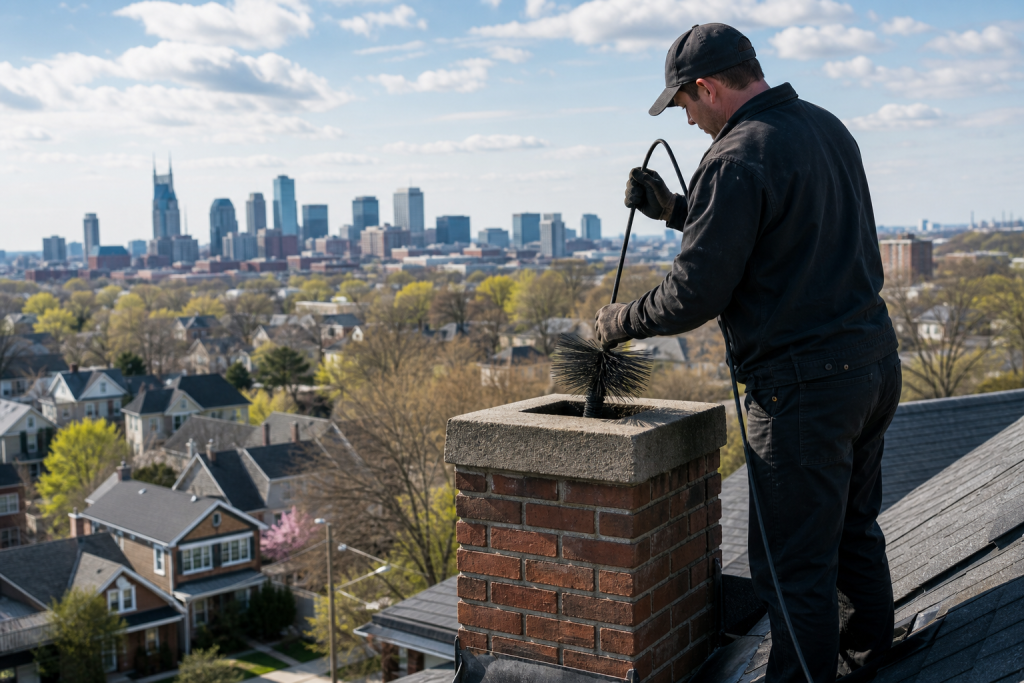
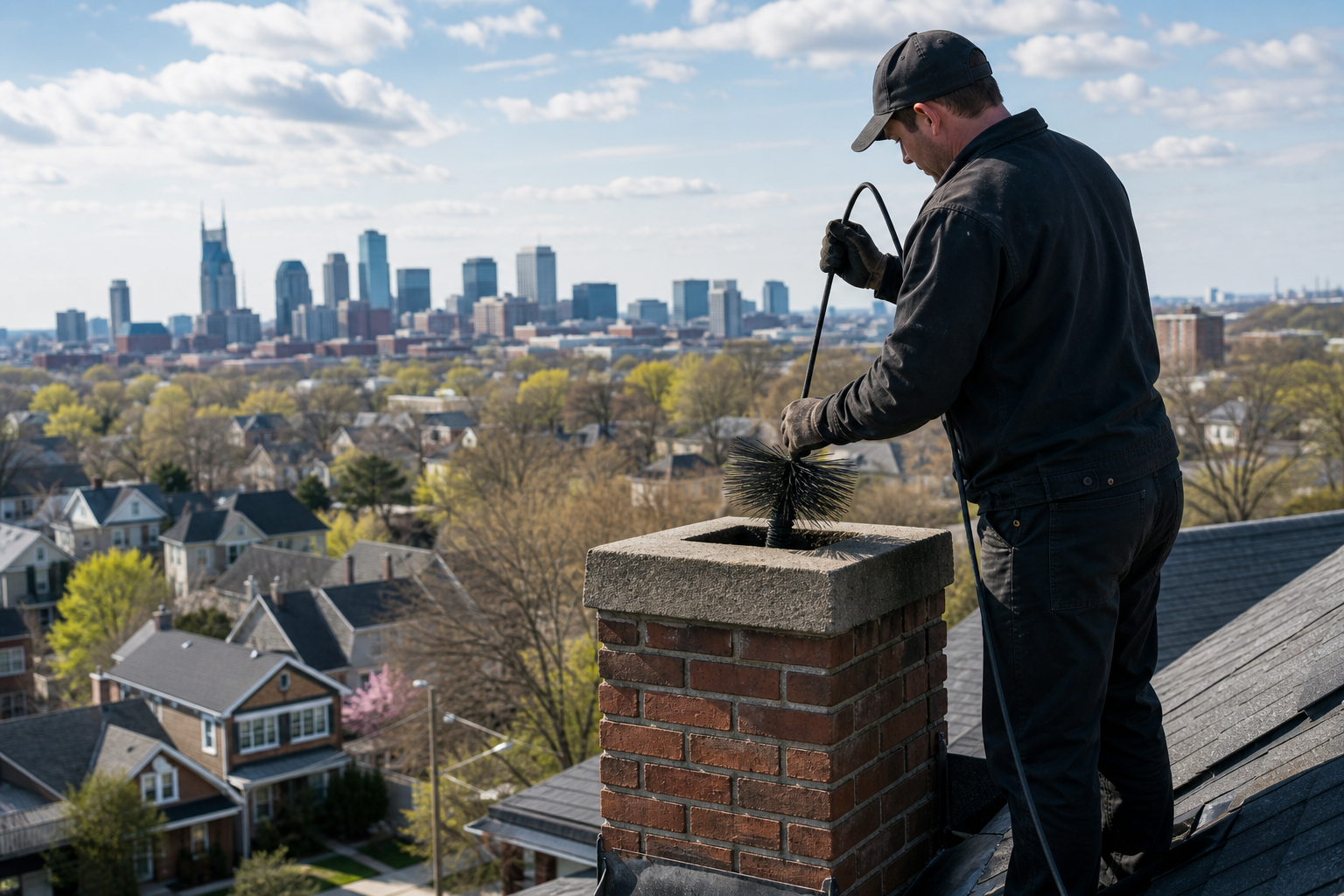
DuraFlex Chimney Cleaning & Sweep in Nashville: A Homeowner’s Guide
DuraFlex chimney liner installation in Nashville typically costs $2,800–$4,500 for a standard single-flue application and requires a Level 2 camera inspection before any work is quoted. The flexible aluminum silicate system is engineered specifically for chimneys with offsets or deteriorated clay flue liners that can’t accommodate rigid stainless steel. If you’re weighing liner options for a Nashville home built before 1980, call us at (855) 963-4743 — we’ll put a camera in your flue first and tell you honestly whether DuraFlex, rigid liner, or a different repair path makes sense.
Here’s the truth most homeowners don’t hear: DuraFlex is one of the best products we install — and also one of the most oversold in Middle Tennessee. If a contractor recommends it for your chimney without putting a camera in the flue first, walk away. We’ve seen too many Nashville homeowners pay for a liner that solved the wrong problem, or worse, masked a structural issue that needed addressing.
What DuraFlex Actually Is (And What It Isn’t)
DuraFlex is a flexible, insulated aluminum silicate chimney liner system manufactured by Olympia Chimney. It’s designed to reline existing masonry chimneys that have compromised clay flue tiles but intact exterior structure — the brick and mortar shell is sound, but the interior passage is cracked, spalled, or improperly sized for modern appliances.
What separates DuraFlex from standard flexible liners is its woven construction and high-temperature insulation blanket. The aluminum silicate material handles continuous flue temperatures up to 1,000°F and intermittent spikes to 1,400°F, which covers most residential wood-burning and gas applications in Nashville. The insulation layer maintains proper flue gas temperature to prevent creosote condensation — critical in our climate, where winter temperature swings can drop the exterior chimney wall below the dew point faster than in more stable northern climates.
What DuraFlex is not: a structural repair. It doesn’t fix a leaning chimney, rebuild a missing crown, or address exterior water infiltration. We’ve inspected chimneys in East Nashville where a previous installer dropped a DuraFlex liner into a flue with active water intrusion from a failed crown. The liner performed as designed, but water continued degrading the brick from the outside. Three years later, that homeowner needed a partial rebuild anyway.
Key applications where DuraFlex excels:
- Chimneys with one or more offsets (bends) that prevent rigid liner insertion
- Older Nashville homes with narrow, unlined flues originally built for coal or early gas appliances
- Clay tile liners with isolated cracking or spalling but no structural shifting
- Conversions from oil to gas or wood-to-gas where the existing flue is oversized for the new appliance’s BTU output
The Inspection Prerequisites Nobody Talks About
Before DuraFlex enters the conversation, three conditions must be verified through a Level 2 internal camera inspection. No exceptions — not for us, not for any installer working in Nashville.
Flue geometry and offset mapping. We run a camera from top to bottom and measure every deviation from vertical. DuraFlex navigates offsets up to approximately 30 degrees gracefully; beyond that, or with multiple tight bends, insertion becomes difficult and the liner may not seat properly against the flue walls. In Germantown last month, we mapped a 1910 chimney with a 45-degree offset three feet down — DuraFlex wasn’t the right call, and we recommended a rigid sectional liner with factory-engineered elbows instead.
Existing deterioration level. We document every crack, missing tile section, and mortar joint void. Minor spalling? DuraFlex sleeves right past it. But if the clay liner has collapsed sections or if the flue walls show significant thickness loss, the chimney may need relining with a poured refractory system like HeatShield, or in severe cases, reconstruction. Installing DuraFlex over a structurally compromised flue is like putting a new exhaust pipe on a car with a cracked engine block.
Appliance BTU rating compatibility. DuraFlex comes in multiple diameters — 3″ to 8″ typically — and each has a maximum BTU capacity. A 6″ DuraFlex liner handles roughly 140,000 BTU for gas appliances, but wood-burning applications require larger diameters based on fireplace opening size and chimney height. We cross-reference manufacturer specs with your appliance plate data. Oversizing wastes money; undersizing creates drafting problems and creosote buildup.
We also verify clearance to combustibles. Nashville’s older neighborhoods — Sylvan Park, Inglewood, the Nations — are full of chimneys built with minimal or inconsistent clearance to framing. DuraFlex’s insulation layer helps, but it doesn’t eliminate the need for proper air space.
When DuraFlex Wins in Nashville (And When It Doesn’t)
Nashville’s housing stock gives DuraFlex a natural advantage in specific scenarios. Our pre-World War II neighborhoods — Lockeland Springs, Edgefield, Historic Buena Vista — feature chimneys with hand-laid brick and flues that wander slightly off-plumb as they rise. These irregular passages are exactly what flexible liner systems were engineered for. A rigid stainless liner would require extensive flue modification or partial demolition to install.
The clay tile in these older chimneys also tends toward smaller diameters — 6″×6″ or 6″×10″ interior dimensions — that don’t match modern appliance requirements. DuraFlex’s range of diameters lets us right-size the flue without rebuilding from the foundation.
Where rigid stainless liner is the better choice:
- Straight, vertical flues with no offsets — rigid liner drafts more efficiently and typically costs 15–20% less
- New construction or additions where chimney access is open and unrestricted
- Very high-efficiency gas appliances where condensing flue gases demand 316Ti stainless steel throughout
- Commercial applications or multi-story residential with very tall flue runs
Where neither liner is appropriate:
- Chimneys with exterior structural damage — leaning, significant mortar loss, or spalled brick faces
- Missing or failed chimney crowns allowing chronic water penetration
- Flues with large gaps between the clay liner and surrounding masonry that indicate settling or foundation movement
We pulled a failed installation out of a garage over in Donelson last spring where a handyman had dropped DuraFlex into a chimney with a separated crown and saturated brick. The liner was pristine; the surrounding structure was crumbling. The homeowner paid twice — once for the wrong fix, once for the right one.
What Proper DuraFlex Installation Looks Like
A manufacturer-compliant DuraFlex installation follows a specific sequence. As a homeowner, you should be able to verify each step was completed — and any installer who won’t explain their process is waving a red flag.
- Pre-installation camera documentation. We record the full flue condition before any work begins. This protects both parties and establishes a baseline for warranty purposes.
- Flue preparation. The existing flue is swept and debris removed. Any protruding mortar or tile fragments are addressed — DuraFlex needs a relatively smooth passage.
- Bottom termination assembly. A proper connector adapts the liner to your appliance or fireplace throat. For fireplace inserts, this means a listed adapter plate; for gas appliances, a properly sized collar with secure mechanical fastening.
- Liner insertion and top anchoring. The DuraFlex is pulled down from the top (or pushed up from the bottom in limited-access situations) and secured with a top plate that seals the flue opening and prevents water intrusion. The top plate must be compatible with the liner diameter and properly sealed with high-temperature sealant.
- Insulation completion. The insulation blanket is secured with stainless steel mesh and termination collars at both ends.
- Post-installation camera verification. We run the camera again to confirm full liner seating, proper connector engagement, and no installation damage.
- Documentation and warranty registration. Manufacturer warranty requires professional installation and typically mandates annual inspection and cleaning to remain valid.
The entire process for a standard Nashville two-story home takes one to two days. We coordinate with you on appliance shutdown and relighting — gas connections require a licensed plumber in Tennessee, which we arrange as part of our project management.
When to call a pro: If your chimney hasn’t had a Level 2 inspection in the past year, or if you’re experiencing draft problems, smoke spillage, or unusual odors, don’t guess at the solution. Apex Chimney Cleaning Service Nashville home provides camera inspections that take the guesswork out of liner decisions.
Lifespan, Warranty, and What Voids Coverage
DuraFlex carries a limited lifetime warranty when installed by a qualified professional and maintained according to manufacturer specifications. But “lifetime” has conditions that Nashville homeowners need to understand.
The warranty covers manufacturing defects and liner failure under normal use. It does not cover damage from chimney fires, water infiltration from unmaintained crowns or caps, or installation by uncertified personnel. Most critically, the warranty requires annual chimney inspection and cleaning — documented, professional service. Skip a year, and you’ve potentially voided your coverage.
Realistic lifespan in Nashville’s climate: 15–25 years for properly maintained installations. The aluminum silicate material resists corrosion from normal combustion byproducts, but our freeze-thaw cycles and occasional ice damming on northern exposures can accelerate exterior component wear. The top plate, termination collar, and rain cap typically need attention at 10–15 years.
We recommend pairing DuraFlex installation with a quality chimney cap from Gelco or Copperfield — brands we stock specifically for their durability in Tennessee’s variable weather. A $200 cap replacement at year twelve beats a $3,000 liner replacement because water found a path past a failed termination.
Related services in Nashville: If your inspection reveals issues beyond liner needs, Chimney Repair in Dickson and Fireplace Services in Dickson cover the full scope of what we handle — from crown rebuilds to fireplace insert installations.
Cost Breakdown: What Nashville Homeowners Should Expect
| Component | Typical Range |
|---|---|
| Level 2 camera inspection | $175–$275 |
| DuraFlex liner (material only, 6″ diameter) | $800–$1,200 |
| Insulation blanket and mesh | $200–$350 |
| Top plate and termination hardware | $150–$300 |
| Bottom connector/adapter | $100–$250 |
| Labor (1–2 days) | $1,200–$1,800 |
| Chimney cap (recommended addition) | $200–$450 |
| Total installed cost | $2,800–$4,500 |
Complex installations — tall chimneys, multiple flues, difficult roof access, or required masonry repairs before liner placement — push toward the higher end. We provide itemized quotes after inspection, not ballpark figures over the phone. Our Chimney Cleaning & Sweep in Dickson page outlines our inspection process in detail.
Compare this to rigid stainless liner at $2,200–$3,800 for straightforward applications, or $6,000–$12,000+ for full chimney rebuild when relining isn’t viable. The honest assessment of which path fits your chimney is what you’re paying for in that initial inspection.
The Bottom Line
DuraFlex is a legitimate, well-engineered solution for specific chimney conditions — primarily older Nashville homes with offset flues or deteriorated clay liners where the exterior masonry remains sound. It’s not a universal fix, and any recommendation without camera verification is a sales pitch, not a diagnosis.
Key takeaways for Nashville homeowners:
- Demand a Level 2 camera inspection before any liner recommendation
- DuraFlex excels with flue offsets and right-sizing older, smaller flues
- Rigid liner is more efficient and economical for straight, modern chimneys
- Manufacturer warranty requires annual professional maintenance — budget accordingly
- Pair liner installation with proper crown and cap work to protect your investment
Eight years in this trade, and we’ve learned that the cheapest estimate is rarely the honest one. Nearly 800 homeowners have trusted us with their chimney systems, and our 4.9-star reputation comes from recommending the right fix — even when it’s not the most profitable job for us. If you’re in Nashville and need an honest assessment of whether DuraFlex makes sense for your chimney, call (855) 963-4743 for a free estimate. Michael leads every job, and we’ll show you exactly what your flue looks like before we talk solutions.
Frequently Asked Questions
Most Nashville homeowners pay between $2,800 and $4,500 for a complete DuraFlex installation, including inspection, materials, and labor. The final price depends on flue height, diameter needed, offset complexity, and whether masonry repairs are required first. Call (855) 963-4743 for a free, itemized quote after camera inspection — estimates are always free.
No. DuraFlex requires an intact exterior masonry structure, flue offsets within manufacturer specifications, and adequate clearance to combustibles. Chimneys with structural leaning, significant exterior spalling, or foundation settling need repair or rebuild before any liner consideration. A Level 2 inspection determines eligibility — we won’t recommend DuraFlex without one.
With proper maintenance, 15–25 years. The manufacturer warranty is limited lifetime but requires annual professional inspection and cleaning to remain valid. Exterior components like the top plate and rain cap typically need replacement at 10–15 years. Neglected maintenance — especially water intrusion from failed crowns — can cut lifespan dramatically.
Neither is universally better — it depends on your chimney. DuraFlex is superior for flues with offsets or irregular geometry common in pre-1950 Nashville homes. Rigid liner drafts more efficiently, costs less for straight flues, and is preferred for very high-efficiency gas applications. We recommend based on inspection findings, not product preference.
Written by Michael Brown, Owner & Lead Technician at Apex Chimney Cleaning Service Nashville, serving Nashville since 2018.
Need Chimney Cleaning Help?
Call Apex Chimney Cleaning Service Nashville — licensed & insured, here with fast after-hours help in Nashville.
(855) 963-4743