
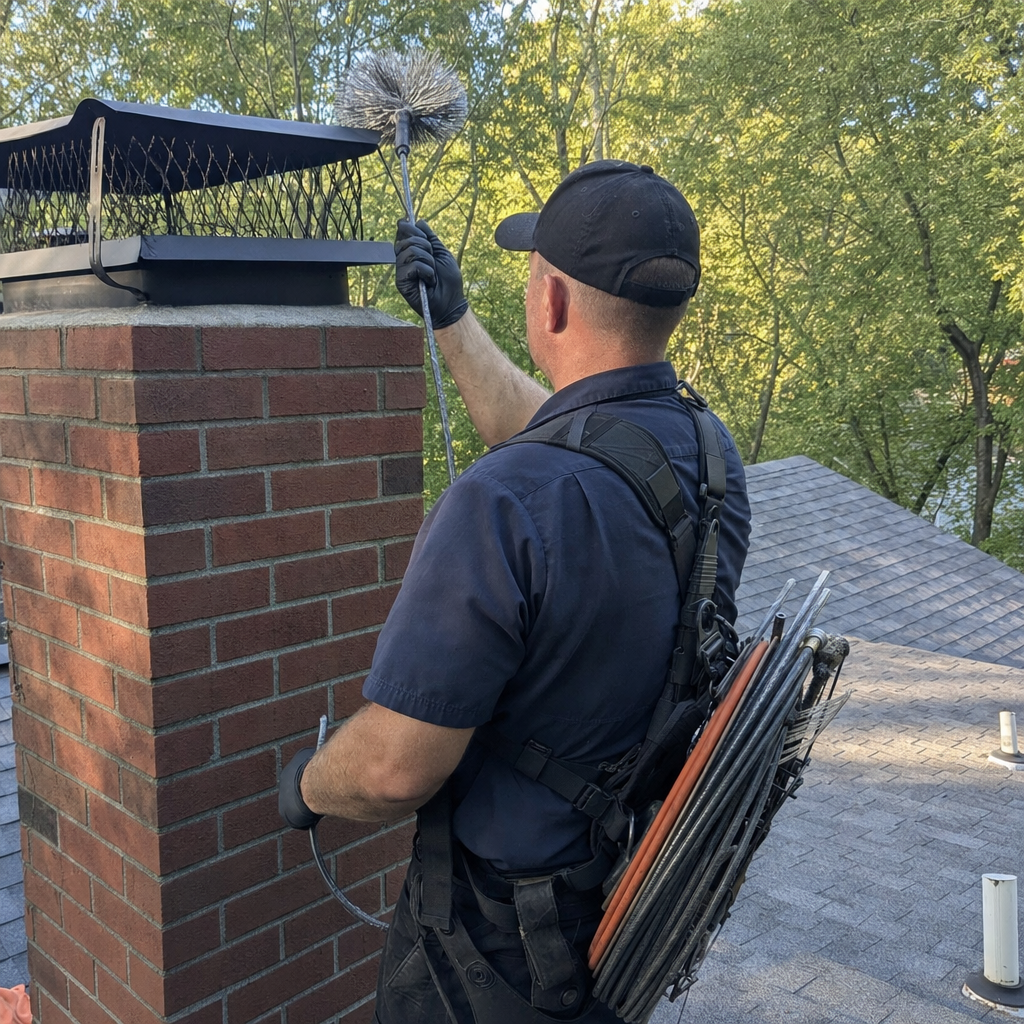
Chimney Cap Installation Cost in Nashville: What You’ll Actually Pay in 2026
Chimney cap installation in Nashville typically runs $150–$400 for a standard single-flue stainless steel cap, $280–$550 for a multi-flue cover, and $600–$1,400 for custom copper. Most residential jobs we handle in East Nashville, Sylvan Park, and Germantown fall in the $200–$450 range including inspection and proper fitting. Call (855) 963-4743 for a free estimate — we stock Gelco and Famco caps and can usually install same-week.
Nashville gets nearly 47 inches of rain a year, and an uncapped masonry chimney from the 1930s is essentially an open pipe into your attic. The cap itself costs $150–$400 installed, but the interior water damage it prevents can run into the thousands. We’ve pulled saturated insulation, rotted rafter tails, and rusted damper assemblies out of flues that simply needed a $250 cap five years earlier. In this climate, the question isn’t whether you can afford a chimney cap — it’s whether you can afford not to have one.
Why Cap Cost Varies: What You’re Actually Buying
Not every cap is the same piece of metal with a different price tag. The cost difference between a proper cap and a cheap one shows up three winters later, when the galvanized steel you saved $80 on has rusted through and the flue is taking water again.
Here’s how the pricing breaks down for Nashville homeowners:
| Cap Type | Material | Typical Installed Cost | Best For |
|---|---|---|---|
| Single-flue cap | Stainless steel (Gelco/Famco) | $150–$280 | Standard masonry flue, most common |
| Single-flue cap | Galvanized steel | $90–$160 | Budget option — not recommended in Nashville humidity |
| Multi-flue cover | Stainless steel | $280–$550 | Two or more flues on one chimney |
| Multi-flue cover | Copper | $600–$1,400 | Historic homes, premium longevity |
| Custom fabricated | Stainless or copper | $400–$900 | Oversized or irregular flue openings |
| Chimney crown + cap combo | HeatShield crown repair + cap | $650–$1,200 | Cracked crown with water intrusion |
The galvanized caps at the low end? We’ve replaced dozens of them in Inglewood and 12 South after three to four years of Nashville’s wet springs and humid summers. The zinc coating fails, the steel underneath blooms with rust, and you’re paying for another install plus whatever water got in during the gap. Stainless steel costs more upfront but doesn’t corrode in our climate — it’s the only material we install on our own jobs unless a homeowner specifically requests otherwise.
Copper caps are a different conversation. At $600–$1,400, they’re not for everyone, but on a 1920s foursquare in Germantown or a restored Victorian in Edgefield, the 40–50 year lifespan and the patina that matches the neighborhood’s aesthetic make sense. We’ve installed Copperfield copper caps that will outlast the current owner and probably the next one.
What Nashville’s Climate Does to Uncapped Chimneys
Nashville sits in a freeze-thaw transition zone that punishes brick and mortar all winter. Water gets into cracks, expands when it freezes, widens the crack, and repeats. An uncapped flue accelerates this dramatically — rain enters directly, runs down the flue walls, and soaks into the smoke chamber and firebox.
We’ve inspected chimneys in Sylvan Park where the clay flue liner had visible water streaks from top to bottom, and the damper was frozen solid with rust. The repair bill for that kind of interior damage — liner replacement, smoke chamber parging, possibly firebox rebuilding — starts at $2,500 and climbs fast. A $250 stainless cap installed in year one prevents it entirely.
The humidity is the quieter killer. Even without a hard freeze, constant moisture in an uncapped flue keeps the interior masonry damp year-round. That moisture wicks into adjacent framing, stains drywall, and creates the musty smell that short-term rental guests complain about in reviews. Speaking of which —
The Airbnb Factor: Why Short-Term Rentals Need Caps Now
Nashville’s density of short-term rentals in older neighborhoods creates a maintenance problem most out-of-state owners don’t see coming. A wood-burning fireplace is a selling point for bachelorette weekends and tourist stays, but guests burning small, low-temperature “ambiance” fires deposit creosote faster than regular residential users. They also don’t report problems — they just leave a review.
An uncapped flue in a rental property accumulates moisture damage between every guest visit. We’ve been called to East Nashville Airbnbs where the ceiling stain appeared six months after the cap went missing in a storm, and the owner — often based in California or New York — had no idea until a guest mentioned it. The repair cost plus lost booking revenue during remediation dwarfs the $200 cap that would have prevented it.
For rental properties, we recommend annual inspection with cap verification. It’s not an upsell — it’s the math of operating a fireplace in a high-rainfall city with high guest turnover.
Wildlife Exclusion: The Cost of Doing Nothing
Here’s something the big-box cap displays don’t mention: an uncapped chimney in tree-dense Nashville neighborhoods is an active wildlife target.
Chimney swifts — small, cigar-shaped birds — are federally protected under the Migratory Bird Treaty Act. Once they nest in your flue, you cannot legally remove them until the young leave in late summer. We’ve had Germantown homeowners call in May wanting a cap installed, and we have to explain that if swifts are present, we can’t touch it until August. The delay means months of bird noise, falling debris, and blocked draft — plus the cost of a proper cleaning and cap installation once they’re gone.
Raccoons are less legally complicated but more destructive. They’re excellent climbers, a flue is a hollow tree as far as they’re concerned, and a trapped raccoon can damage liner tiles trying to escape. Removal plus repair plus cap installation runs $400–$800. The cap that would have excluded them? $200, installed before they moved in.
In Inglewood, where mature oak canopy meets 1940s housing stock, we see this combination regularly. The neighborhood’s charm — trees, older homes, working fireplaces — is exactly what makes capless chimneys vulnerable.
How We Handle Cap Installation: One Visit, Done Right
When you call (855) 963-4743, Michael leads every job — there’s no handoff to a rotating crew. We inspect the flue, crown, and interior masonry in the same visit, measure for proper cap fit, and install from stock or order custom if needed. From sweep to rebuild, we handle it under one roof.
Here’s what the process actually looks like:
- Visual inspection — We check flue condition, crown integrity, and clearances before recommending any cap. A cracked crown needs repair before or with cap installation, or you’re just redirecting water to a new entry point.
- Measurement and fit — Flue liners vary in dimension. We measure outside dimensions and account for any irregularities. A cap that’s too small blows off in wind; one that’s too large creates gaps for water and animals.
- Material selection — We stock Gelco and Famco stainless caps in common sizes, with Copperfield copper available by order. We explain the tradeoffs and let you decide — no pressure toward the highest-margin option.
- Installation — Proper mounting with stainless hardware, storm collar or sealant as appropriate, and verification that the damper still operates freely.
- Documentation — Photos of before and after, written notes on flue condition, and recommendation for next service interval.
The full-system capability matters here. A handyman can bolt on a cap, but if the crown is cracked or the flue liner is deteriorated, the cap is a bandage. We diagnose the whole system, and if you need Chimney Cap & Crown work together, we price it as one job, not two separate mobilizations.
When Cap Installation Gets More Complex
Some Nashville chimneys need more than a standard cap. Here are the situations that push cost toward the higher end:
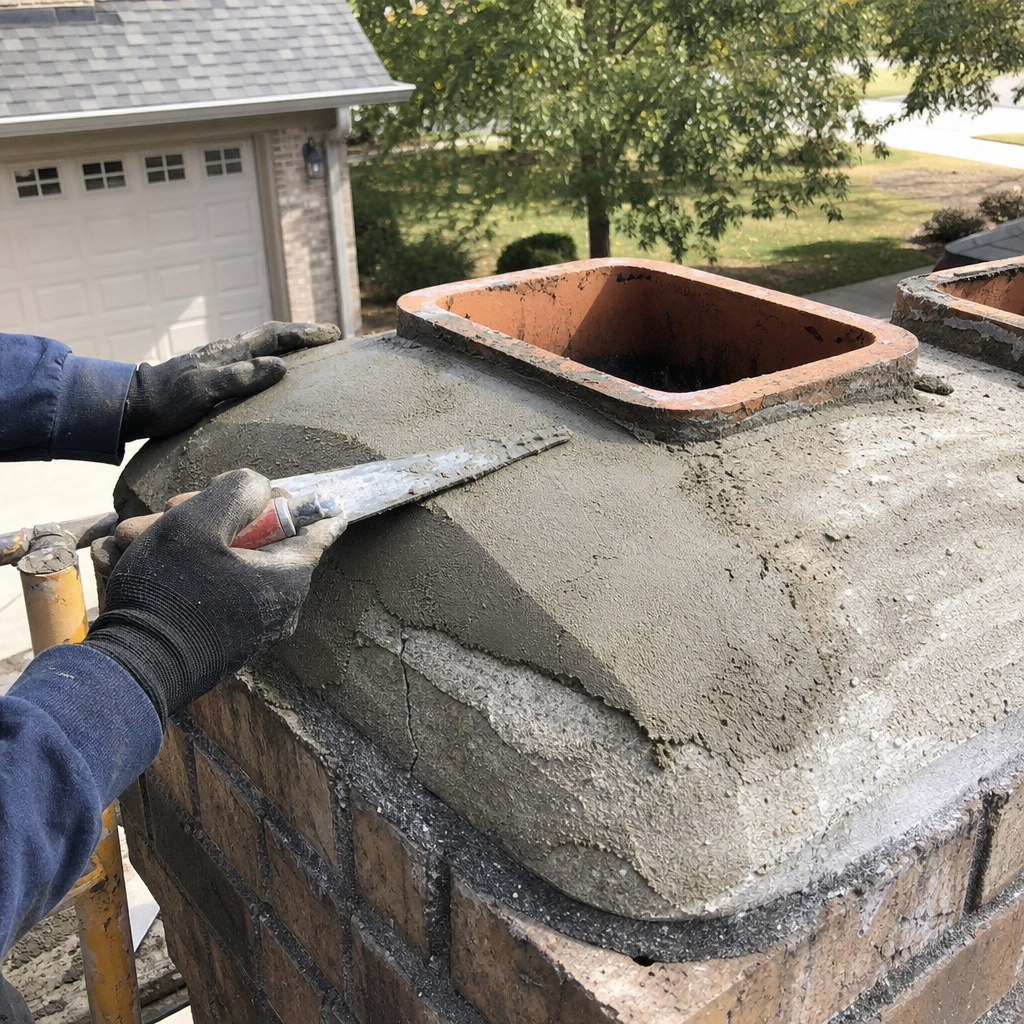
Crown reconstruction required: If the concrete crown — the slab that tops the chimney — is cracked or spalling, water will enter around any cap we install. We use HeatShield crown repair or pour new concrete crowns, then cap. Combined jobs run $650–$1,200 depending on chimney size and access.
Flue liner damage: In 12 South and East Nashville, we regularly find clay tile liners with missing or shifted tiles, often from thermal cycling in our freeze-thaw climate. A cap won’t fix liner problems — we need to evaluate whether liner repair or replacement is warranted.
Custom fabrication: Some 1910s–1930s chimneys have oversize or irregular flue openings that don’t match standard cap dimensions. We measure and order custom, or fabricate on-site for unusual cases.
Steep roof access: Two-story homes with steep pitches require additional safety setup. We don’t charge extra for standard walkable roofs, but extreme pitches or multi-story heights may add $50–$100 for the additional rigging time.
Key Takeaways
- Most Nashville homeowners pay $200–$450 for chimney cap installation including inspection and fitting.
- Stainless steel is the practical choice in Nashville’s high-humidity, high-rainfall climate — galvanized steel corrodes too quickly to be cost-effective.
- Cap installation prevents water damage, wildlife intrusion, and freeze-thaw deterioration that costs far more to repair.
- Short-term rental properties in Nashville face accelerated creosote buildup and hidden moisture damage — caps are essential maintenance, not optional.
- Michael Brown leads every Apex job with eight years of hands-on experience and nearly 800 verified reviews backing the work.
FAQs
Chimney cap installation in Nashville typically costs $150–$400 for a standard stainless steel single-flue cap, $280–$550 for a multi-flue cover, and $600–$1,400 for copper. Most residential jobs fall in the $200–$450 range. Call (855) 963-4743 for a free exact quote — we measure on-site and stock common sizes for same-week installation.
Repairing a damaged cap is rarely cost-effective — bent mesh, rusted bases, or missing hardware usually mean the cap has already failed at its job. A new stainless steel cap from Gelco or Famco installed correctly costs $150–$280 and lasts 15–20 years in Nashville’s climate. We assess the existing cap on inspection, but replacement is usually the better value. Call (855) 963-4743 and we’ll give you an honest read on whether yours is salvageable.
Yes — for standard flue sizes, we carry stainless steel caps in our service vehicle and can install immediately after inspection if the flue and crown are sound. Custom sizes or copper caps require ordering, typically 5–7 business days. Same-day installation is one advantage of having the decision-maker on the job: Michael measures, evaluates, and executes without waiting for a crew dispatch. Call (855) 963-4743 to check availability.
Yes — an unused flue still takes rain, humidity, and wildlife. In fact, unused chimneys are often the most damaged because no one is monitoring them. We’ve found raccoon nests and swift colonies in chimneys where the homeowner hadn’t lit a fire in years. The water intrusion continues regardless of use, and in Nashville’s climate, that means accelerating mortar deterioration and potential framing damage. A cap costs $150–$400; the damage it prevents costs multiples of that. Call (855) 963-4743 for a no-pressure inspection.
Get Your Cap Installed Before the Next Storm
Nashville’s spring storm season doesn’t wait, and neither does water damage once it starts. We’ve capped chimneys in every established neighborhood from East Nashville to Sylvan Park, and the pattern is consistent: the homeowners who call proactively spend hundreds; the ones who call after ceiling stains appear spend thousands. A clean chimney isn’t a luxury — it’s just maintenance you can see the point of when something goes wrong. Call (855) 963-4743 for a free estimate and same-week availability. Michael will inspect, measure, and install in one visit if your flue is standard size.
Written by Michael Brown, Owner & Lead Technician at Apex Chimney Cleaning Service Nashville, serving Nashville, TN.