
Chimney Crown Repair Cost in Nashville: $400–$2,800 Depending on What Your Crown Actually Needs
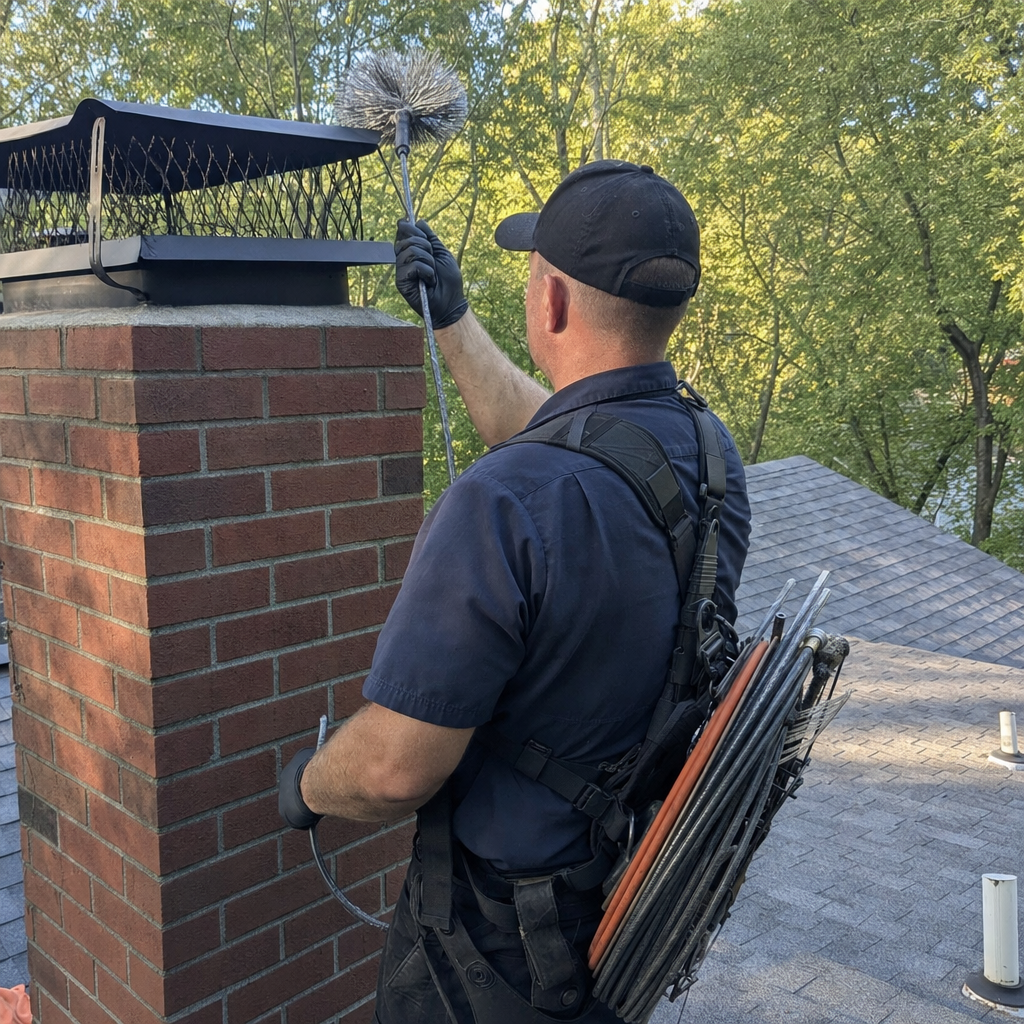
Chimney crown repair in Nashville typically runs $400–$950 for surface sealing, $1,200–$1,800 for partial rebuilds, and $1,800–$2,800 for full crown replacement on standard residential chimneys. Most homeowners we see in East Nashville, Sylvan Park, and Germantown land in the middle range because Nashville’s 47 inches of annual rainfall and aggressive freeze-thaw cycling usually mean cracks have progressed past what sealant alone can fix. Call (855) 963-4743 for a free inspection and exact quote — we’ll photograph the crown condition so you see what we see.
Why Nashville’s Climate Makes Crown Cracks Worse — and More Expensive — Than Elsewhere
A chimney crown crack in Nashville doesn’t stay a crown problem for long. Our freeze-thaw transition zone subjects brick and mortar to repeated expansion-contraction cycles each winter — more damaging than the consistently cold winters of Knoxville or the milder winters of Memphis. The soft lime mortar common in pre-1950s chimneys across East Nashville, Inglewood, and Germantown is especially vulnerable; it’s more porous than modern Portland mortar, so water penetrates faster and freezes wider.
By the time you notice a water stain on your ceiling, the repair has usually escalated from crown-only to crown-plus-liner-plus-firebox. We’ve pulled apart chimneys in Sylvan Park where a cracked crown left unrepaired through one rainy season allowed moisture to degrade the clay tile liner, rust the damper, and spall the rear firebox wall. The homeowner’s $1,400 crown rebuild became a $4,200 system repair.
Here’s what typically fails sequentially when a Nashville chimney crown is left open to the weather:
- Months 1–3: Water enters through crown cracks, saturating the top course of brick and beginning mortar joint deterioration
- Months 4–8: Moisture reaches the flue liner through deteriorated mortar joints; clay tiles crack from thermal shock when fires are lit against wet surfaces
- Months 9–12: Liner gaps allow combustion gases to contact surrounding framing; water reaches the smoke chamber and firebox, causing brick spalling and metal damper corrosion
- Year 2+: Ceiling stains, attic mold, or — in worst cases — structural compromise to the chimney stack itself
Michael Brown, our Owner and Lead Technician, grew up in East Nashville back when the neighborhood was more hardware stores than coffee shops. He’s inspected thousands of crowns in the same craftsman bungalows and brick foursquares built between 1910 and 1950, and he’ll tell you straight: sealant on a structurally compromised crown is money spent twice. We’ve had to redo too many DIY “fixes” where someone slapped on a big-box waterproofing product that peeled within two seasons.
What You’re Actually Paying For: Three Tiers of Crown Repair
Not every cracked crown needs the same solution, and part of our job is matching the repair to the actual condition. We use professional-grade materials — Olympia Chimney crown coatings and Copperfield refractory products for rebuilds — because Nashville’s nearly four inches of rain per month in spring and fall will destroy anything less.
| Repair Type | Typical Cost Range | What It Addresses | Expected Lifespan |
|---|---|---|---|
| Surface sealant application | $400–$950 | Hairline cracks, minor surface spalling, intact structural base | 5–8 years with maintenance |
| Partial crown rebuild | $1,200–$1,800 | Cracks extending through crown depth, edge deterioration, minor structural compromise | 15–20 years |
| Full crown replacement | $1,800–$2,800 | Severe cracking, crown separation from flue tile, structural failure, improper original slope | 20–30 years |
Sealant application only works when the crown’s structural integrity is sound — the cracks are surface-level, the slope still sheds water properly, and there’s no separation between the crown and the top flue tile. We see this most often on chimneys built after 1980 with harder Portland-based crowns, or on pre-1950s chimneys where a previous owner already did a proper rebuild and we’re catching early deterioration.
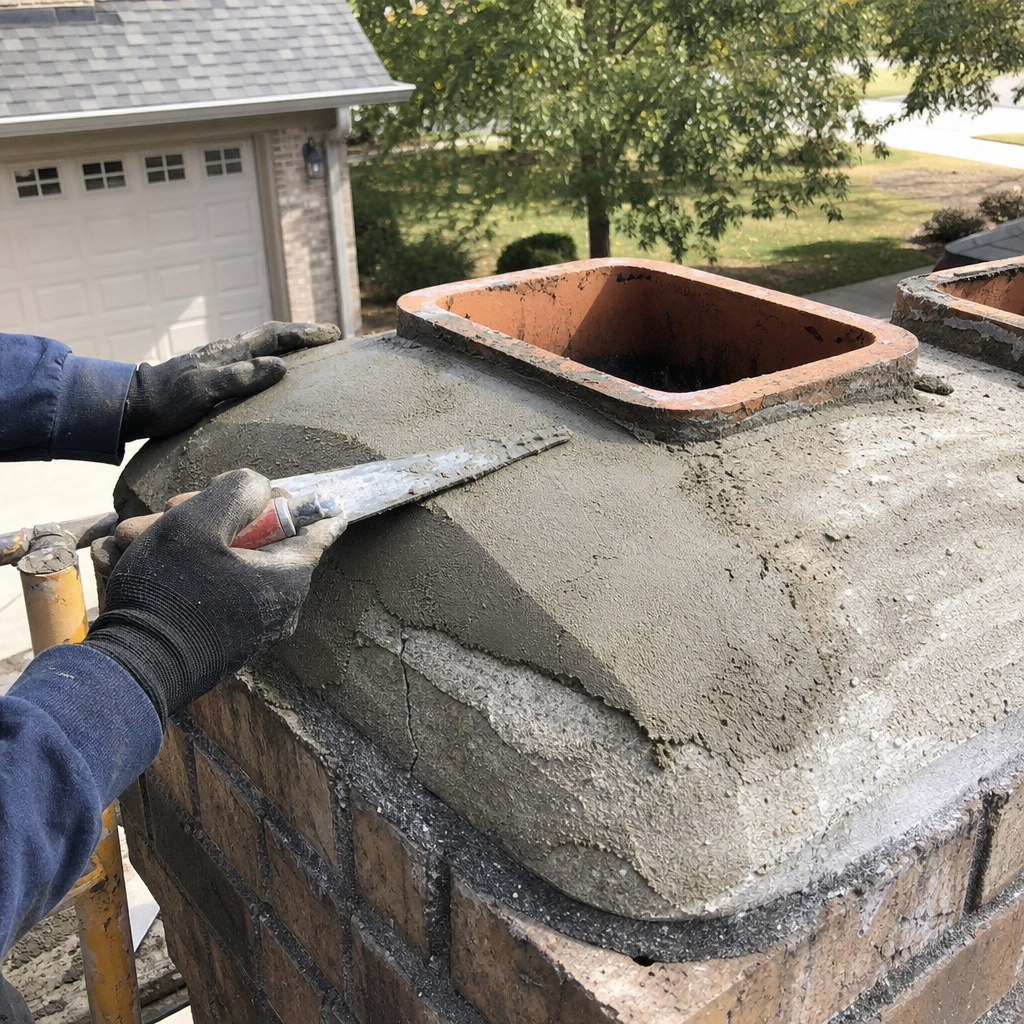
Partial rebuild becomes necessary when cracks penetrate the full depth of the crown, when the edges have begun to crumble, or when the crown has settled slightly away from the flue tile but hasn’t fully separated. We cut back to sound material, form a new pour with proper slope and drip edge, and bond it to the existing structure. This is where most Nashville homeowners end up, especially in neighborhoods like 12 South and Inglewood where original lime-mortar crowns have endured decades of thermal cycling.
Full replacement is the only real option when the crown has separated from the flue tile, when cracks run completely through and allow water to pool on the smoke chamber below, or when the original crown was poured flat (no slope) or without a drip edge — both common on quick 1960s–1980s construction in Nashville’s suburban expansion. We remove the entire crown, inspect the top course of brick and the flue tile condition, then pour a new crown with proper 1/4-inch-per-foot slope, a bonded flue tile joint, and a formed drip edge that directs water away from the brick face.
Common Local Scenarios We See on Nashville Rooflines
Every crown tells a story, and after eight years on Nashville rooftops, we’ve seen patterns tied to specific neighborhoods and construction eras.
The East Nashville 1920s Craftsman: Original lime-mortar crown, often only 2–3 inches thick with no reinforcing mesh. Freeze-thaw has opened cracks wide enough to slide a quarter into. The homeowner usually calls after noticing a water spot near the fireplace wall. These almost always need partial rebuild minimum — sealant would be cosmetic and temporary.
The Germantown Renovation Flip: New gas log insert, new tile surround, original 1915 clay tile flue and crown completely untouched. We’ve found crowns with tree seedlings growing out of them while the interior looks showroom-new. The out-of-state investor who bought the property for Airbnb rental had no idea; their guests were burning low-temperature “ambiance” fires that produce creosote faster than normal residential use, and the compromised crown was letting moisture accelerate liner deterioration behind the pretty facade.
The Sylvan Park 1940s Brick Foursquare: A previous owner tried DIY crown sealant three years ago. It held through one winter, then peeled in sheets. The underlying cracks widened, and now we’re looking at full replacement because water has saturated the top three courses of brick. The homeowner spent $80 on product and a Saturday afternoon; now they’re looking at $2,200.
The Donelson 1970s Ranch: Flat crown with no drip edge, poured as an afterthought by a mason who didn’t understand chimney function. Water has been running straight down the brick face for forty years, eroding mortar joints and spalling brick faces. Crown replacement plus tuckpointing below — the kind of compounded repair that starts with a crown that was never built right in the first place.
Michael photographs crown condition before and after every repair. Homeowners get dated documentation that’s useful for insurance claims and increasingly valuable for Nashville home sales, where buyer inspections now routinely include chimney camera inspections. When a crown is properly rebuilt with professional-grade materials, that documentation becomes a selling point.
What Drives Cost Higher (and What Doesn’t)
Chimney access is the biggest variable we don’t control. A single-story ranch with a shallow roof pitch in Inglewood takes us an hour to set up for; a three-story Victorian in Germantown with a 12/12 pitch and zero roofline access requires scaffolding or a boom lift, and that adds $400–$800.
Flue tile condition can escalate scope too. If the crown has been leaking long enough to crack the top flue tile, we need to address that before pouring a new crown — otherwise we’re bonding to a moving, deteriorating surface. DuraFlex liner systems or HeatShield resurfacing may come into play, which is why we always inspect the full flue before quoting crown work.
What doesn’t drive cost higher: brand-name material markup. We use the same materials the pros specify — Olympia Chimney, Copperfield, Famco — at straightforward pricing. The difference between our sealant job and a handyman’s isn’t a premium we charge; it’s that we won’t sell you sealant when you need rebuild, and we won’t use a product that won’t survive Nashville’s next freeze-thaw winter.
How to Know If Your Crown Needs Repair Now
From ground level, look for these warning signs:
- Visible cracks on the crown surface, especially running parallel to the flue tile
- Chunks of concrete missing from crown edges
- Water pooling on the crown surface after rain (indicates lost slope)
- Staining or efflorescence (white powder) on exterior brick below the crown
- Interior water stains, musty odors, or peeling paint near the fireplace
If you can safely access your roof or have binoculars, check whether the crown has separated from the flue tile — a dark gap there means water is entering the chimney structure directly. Don’t attempt roof inspection if you’re uncomfortable with heights or your roof pitch is steep; this is exactly the kind of assessment we handle during our free inspection.
We also encounter a Nashville-specific issue in the short-term rental market: properties in East Nashville, Sylvan Park, and Germantown with working fireplaces that see far more use from inexperienced guests than their systems were designed for. If you own an Airbnb with a wood-burning fireplace, your crown and liner are aging faster than a standard residential equivalent, and your inspection cycle should be compressed accordingly.
Why Apex Handles Crown Repair Differently
Eight years, one standard. Michael leads every job, so the person quoting your repair is the person pouring your crown or supervising the rebuild. We’ve got 775 verified reviews averaging 4.9 stars — not because we’re the cheapest option in Nashville, but because homeowners recognize when a technician explains what they’re seeing, documents it, and doesn’t pad the scope.
From sweep to rebuild, we handle the full chimney system. A crown repair often reveals liner or firebox issues, and we’d rather coordinate that work ourselves than leave you juggling multiple contractors who each point at the other when something doesn’t align. Our Chimney Cap & Crown service page details the full scope of cap and crown work we offer Nashville homeowners.
A clean chimney isn’t a luxury — it’s just maintenance you can see the point of when something goes wrong. A cracked crown is usually the first visible sign that your chimney system is asking for attention before the damage becomes visible inside your home.
FAQs
Chimney crown repair in Nashville typically costs $400–$950 for surface sealing, $1,200–$1,800 for partial rebuilds, and $1,800–$2,800 for full replacement on standard residential chimneys. Most Nashville homeowners need partial rebuilds due to our aggressive freeze-thaw cycling and high rainfall. Call (855) 963-4743 for a free inspection and exact quote.
Sealing is cheaper upfront at $400–$950, but it’s only the right choice when cracks are surface-level and the crown’s structure is intact. On Nashville’s older lime-mortar chimneys, sealant over structural cracks is temporary and usually costs more in the long run when the rebuild becomes unavoidable. We assess every crown honestly and won’t sell sealant when rebuild is the actual fix.
Same-day repair is possible for sealant applications when weather permits and the crown is accessible. Partial and full rebuilds require dry conditions for proper curing and typically schedule within 3–5 business days. Emergency temporary waterproofing is available if active leaking threatens interior damage. Call (855) 963-4743 to check availability — we prioritize calls from homeowners seeing active water intrusion.
Interior warning signs include water stains on the ceiling near the fireplace, musty odors after rain, efflorescence (white mineral deposits) on exterior brick, or deteriorating mortar joints below the roofline. In Nashville’s climate, these symptoms often appear within one rainy season of crown failure. We offer free inspections with photographed documentation so you know exactly what you’re dealing with.
Get an Honest Assessment Before Nashville’s Next Freeze-Thaw Cycle
Chimney crown cracks don’t heal themselves, and in Nashville’s climate, they accelerate faster than most homeowners expect. Whether you’re seeing warning signs now or want baseline documentation before listing your home, we’ll inspect your crown at no charge, show you exactly what we find, and quote only the work your chimney actually needs. Call (855) 963-4743 to schedule your free estimate — Michael Brown handles every inspection personally, and we’ll have photographs in your inbox before we leave the driveway.
Written by Michael Brown, Owner & Lead Technician at Apex Chimney Cleaning Service Nashville, serving Nashville, TN.